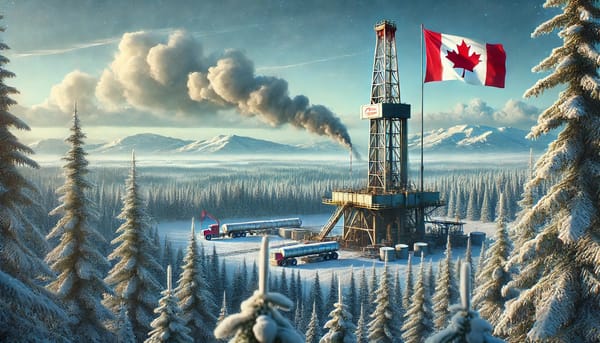
The Emissions Cap Debate in Canada: Balancing Climate Goals with Economic Stability
Introduction
Canada’s oil and gas industry is facing unprecedented pressure as the federal government, led by Prime Minister Justin Trudeau, pushes forward with ambitious climate targets. The government’s plan, outlined by Environment Minister Steven Guilbeault, includes a proposed emissions cap on the oil and gas sector, requiring companies to cut emissions by a third. While the policy aligns with Canada’s commitments to reduce greenhouse gas emissions, it has raised concerns across the business community, particularly in oil-producing provinces like Alberta. This blog will explore the arguments for and against the emissions cap, analyze its potential impact on Canada’s economy, and examine alternative strategies for achieving a balanced approach to environmental and economic sustainability.
1. The Liberal Climate Agenda and the Emissions Cap
The Canadian government has set ambitious climate targets, aiming for net-zero emissions by 2050. The proposed emissions cap on the oil and gas sector is a central component of this agenda. With a target to cut emissions by one-third, the government believes this policy will drive the industry to adopt cleaner technologies and reduce its environmental footprint.
1.1 Overview of the Emissions Cap
The emissions cap is intended to limit the overall greenhouse gas emissions from the oil and gas sector, effectively capping the amount of CO₂ that can be emitted. Companies will be required to operate within this limit, which will become stricter over time. This cap is expected to push companies toward adopting carbon capture and storage (CCS) technologies, transitioning to renewable energy sources, and investing in innovations that lower emissions.
1.2 Steven Guilbeault’s Perspective
Minister Guilbeault has stated that the emissions cap is a necessary step to meet Canada’s climate commitments. Acknowledging the likelihood of backlash, he remains steadfast in the belief that reducing emissions from the oil and gas sector is crucial for the country’s long-term environmental and economic health. Guilbeault emphasizes that the cap is part of a broader strategy to align Canada with global climate goals, which require significant reductions in greenhouse gas emissions.
2. Economic Implications of the Emissions Cap
While the emissions cap aligns with Canada’s climate goals, its economic consequences have sparked debate among industry leaders, economists, and political commentators. Critics argue that the cap could harm the Canadian economy, particularly in oil-dependent provinces, and weaken Canada’s competitiveness in the global energy market.
2.1 The Conference Board of Canada’s Forecast
In March, the Conference Board of Canada published a report predicting that the emissions cap could slow economic growth in the oil and gas sector. The report projected a modest growth of 1.6% in sector output with the cap, compared to 14% growth without it. For Alberta, a province heavily reliant on oil and gas revenues, the implications are significant. The report warns of reduced government revenues, which could impact public services and infrastructure investment.
2.2 Employment Impacts
The emissions cap is also expected to affect employment in the oil and gas sector. With slower growth in output, companies may be less likely to invest in expansion, leading to fewer job opportunities. In Alberta, where the industry is a major employer, this could result in higher unemployment rates and economic hardship for communities dependent on oil and gas jobs. The Conference Board’s report suggests that slower employment growth could have long-term consequences, stifling innovation and reducing opportunities for skilled workers.
2.3 Potential Impact on Provincial Revenues
Alberta and other oil-producing provinces generate substantial revenue from the oil and gas industry. Taxes, royalties, and other revenues support critical public services, including healthcare and education. With reduced growth in the sector, provincial governments could face budget shortfalls, limiting their ability to fund these services. The emissions cap could, therefore, place additional financial strain on provinces already grappling with economic challenges.
3. The Business Council of Canada’s Stance
The Business Council of Canada, led by President Goldy Hyder, has voiced strong opposition to the emissions cap, arguing that it is the wrong move for Canada’s economy and competitiveness. Hyder contends that the cap could undermine Canada’s energy trade with the United States and lead to a disjointed, uncompetitive climate policy.
3.1 Concerns About Economic Harm
Hyder warns that the emissions cap will hurt Canada’s economy by restricting the oil and gas sector’s ability to grow and compete internationally. He argues that Canada’s economy is closely tied to the performance of its energy sector, and limiting the industry’s growth could have ripple effects across other sectors, from manufacturing to services.
3.2 Cross-Border Energy Trade Implications
Canada is a major exporter of oil and natural gas to the United States, and the emissions cap could disrupt this trade relationship. Hyder argues that by imposing stringent limitations on emissions, Canada risks making its energy sector less attractive to U.S. partners. American companies and refineries may seek alternative suppliers if Canadian oil and gas become more expensive or difficult to obtain. This shift could weaken Canada’s trade balance and reduce foreign investment in the energy sector.
3.3 Competitiveness of Canada’s Climate Policy
Hyder also points out that the emissions cap could render Canada’s climate policy “incoherent and uncompetitive.” While the federal government is focused on reducing emissions, the lack of a unified approach across provinces could create inconsistencies. Additionally, stringent regulations in Canada may place domestic companies at a disadvantage compared to international competitors operating under less restrictive policies, further harming Canada’s global competitiveness.
4. Environmental Goals vs. Economic Realities: The Challenge of Balance
The emissions cap debate highlights the tension between Canada’s environmental aspirations and its economic dependencies. Striking a balance between reducing emissions and maintaining economic growth is a complex challenge, especially for a country with such a significant stake in fossil fuels.
4.1 The Need for a Balanced Approach
While climate action is essential, critics argue that the federal government’s approach may be overly aggressive. By placing a cap on emissions without considering the broader economic implications, there is a risk of harming Canada’s economy without achieving meaningful environmental benefits. Proponents of a balanced approach argue for gradual emissions reductions that allow the oil and gas sector to adapt and invest in cleaner technologies.
4.2 Economic Diversification as a Solution
One way to reduce Canada’s reliance on the oil and gas industry is to invest in economic diversification. By developing sectors like clean energy, technology, and advanced manufacturing, Canada could reduce its dependence on fossil fuels while creating new employment opportunities. Diversification would also make Canada’s economy more resilient to global energy market fluctuations and regulatory shifts.
4.3 Climate Action That Supports Growth
Critics of the emissions cap suggest that Canada should pursue climate policies that support economic growth rather than hinder it. This approach includes investing in research and development for clean technologies, providing incentives for companies to reduce emissions, and creating a regulatory environment that fosters innovation. By supporting the industry’s transition rather than imposing limitations, Canada could achieve its climate goals without sacrificing economic prosperity.
5. Alternative Strategies for Emissions Reduction in the Oil and Gas Sector
If the emissions cap is deemed too restrictive, Canada could explore alternative strategies to reduce emissions in the oil and gas sector. These alternatives could offer a more flexible and economically viable path to achieving Canada’s climate objectives.
5.1 Carbon Capture, Utilization, and Storage (CCUS)
One of the most promising technologies for reducing emissions is carbon capture, utilization, and storage (CCUS). CCUS technology captures CO₂ emissions from industrial processes and stores them underground, preventing them from entering the atmosphere. Canada is already a leader in CCUS, with projects in Alberta and Saskatchewan. By incentivizing further investment in CCUS, Canada could reduce emissions without capping production, preserving economic growth.
5.2 Incentivizing Cleaner Production Techniques
The government could encourage oil and gas companies to adopt cleaner production methods by offering tax credits, grants, or other incentives. For example, reducing methane emissions—a potent greenhouse gas—can significantly lower the sector’s overall carbon footprint. By rewarding companies that invest in cleaner technologies, Canada could achieve emissions reductions without imposing a rigid cap.
5.3 Collaborating with Industry Stakeholders
Another approach involves working collaboratively with industry stakeholders to establish voluntary emissions reduction targets. By engaging companies in the goal-setting process, the government can foster a sense of ownership and accountability. Industry-driven initiatives can often be more flexible and innovative, leading to effective emissions reductions without heavy-handed regulations.
5.4 Developing a Carbon Offset Market
A carbon offset market allows companies to invest in projects that reduce or capture emissions as a way to offset their own carbon output. Canada could expand its carbon offset market, providing oil and gas companies with additional tools to meet emissions goals. Offsets can come from renewable energy projects, reforestation, and other initiatives that contribute to overall emissions reductions.
6. Public and Political Implications of the Emissions Cap
The emissions cap has sparked heated debate, with significant implications for Canadian politics and public opinion. The policy has become a focal point in discussions around Canada’s energy future, environmental responsibility, and economic policy.
6.1 Alberta’s Response and Federal-Provincial Relations
Alberta’s government has voiced strong opposition to the emissions cap, viewing it as an attack on the province’s primary industry. This policy has strained relations between Alberta and the federal government, adding tension to an already complex dynamic. The emissions cap debate underscores the challenges of achieving national climate goals in a federal system, where provinces have varying economic priorities and environmental perspectives.
6.2 Public Opinion and Environmental Advocacy
The emissions cap has polarized public opinion, with environmental advocates praising the policy as a necessary step toward a sustainable future, while critics warn of economic consequences. Environmental groups argue that Canada’s oil and gas sector must take responsibility for its emissions, viewing the cap as a step
toward a greener, more sustainable economy. Conversely, industry proponents and many Albertans feel that the policy disproportionately impacts their livelihoods and future prospects.
6.3 Political Ramifications
The emissions cap could have far-reaching political consequences, particularly as Canada prepares for upcoming elections. Energy policy is a key issue for Canadian voters, and the federal government’s approach to emissions reductions could influence electoral outcomes. A change in leadership could bring a shift in climate policy, with some parties advocating for a more industry-friendly approach.
In Conclusion: Moving Forward with Climate and Economic Goals in Balance
Canada’s proposed emissions cap reflects a strong commitment to climate action, but it also exposes the complexities of balancing environmental goals with economic realities. While the policy aims to reduce greenhouse gas emissions, critics argue that it could harm Canada’s economy, restrict cross-border energy trade, and place undue strain on oil-dependent provinces like Alberta.
Achieving Canada’s climate targets without compromising economic stability requires a thoughtful, balanced approach. Alternatives to a strict emissions cap, such as CCUS technology, cleaner production incentives, and carbon offset markets, offer pathways to reduce emissions while supporting industry growth. By fostering collaboration with industry stakeholders and prioritizing economic diversification, Canada can work toward a sustainable future that benefits both the environment and the economy.
The emissions cap debate underscores the need for constructive dialogue among government, industry, and the public to chart a course that aligns Canada’s environmental aspirations with its economic strengths. As Canada navigates this complex transition, a balanced approach will be essential for securing a prosperous, sustainable future.